Not sure where to begin in your improvement plan? Start with the Literacy Excellence Health Check™. Start here

Impact

Literacy improvement case studies

Every student deserves to become a capable reader and writer.

Building the conditions for schoolwide excellence helps turn that commitment into lasting improvement. Different schools, different contexts, different year levels. These literacy improvement case studies show meaningful progress through sustained work to strengthen teaching and the systems that support it.
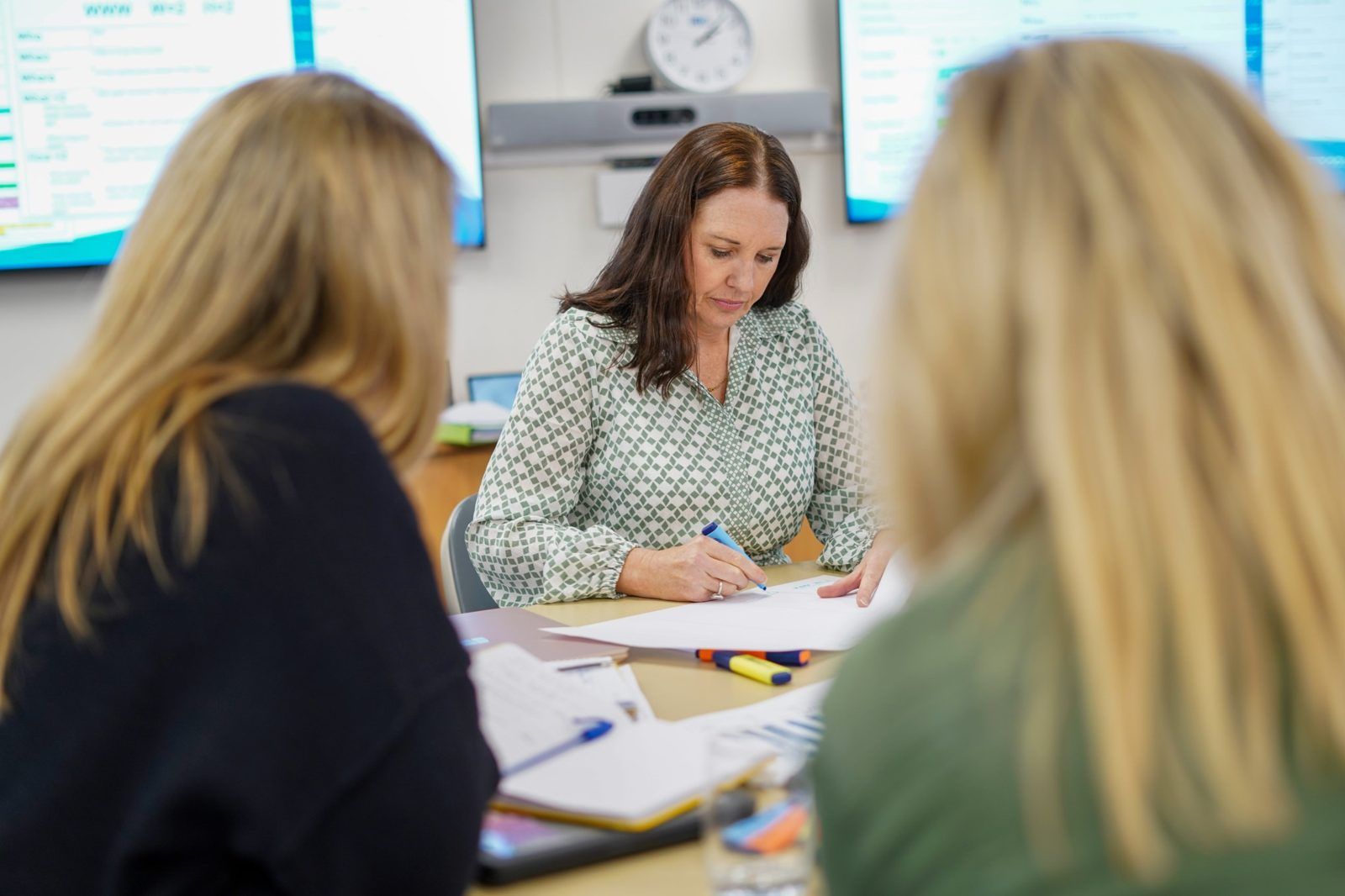
A school leader reviewing literacy data with her leadership team during a Literacy Impact™ partnership session

These shifts did not happen because schools added isolated strategies. They happened because leaders built greater clarity, stronger systems, more consistent instruction, more precise assessment and better implementation structures over time.

I help leadership teams understand what is limiting student progress, decide what to change and in what order, and build the shared expertise and consistent practice needed to sustain improvement, even when staff change.

The purpose is clear: more students becoming capable readers and writers, with greater access to learning and opportunities beyond school. Each result belongs to a school doing the work, with Literacy Impact™ alongside them.

School literacy results

Crib Point Primary School, VIC

NAPLAN writing: 79% of Year 3 and 88% of Year 5 students Strong or Exceeding after seven months of SRSD writing instruction, professional learning and coaching.

Aldercourt Primary School, VIC

Year 4 oral reading accuracy 50% → 80% in four months.

Mahogany Rise Primary School, VIC

Year 4 oral reading accuracy 71% → 91% in four months.

Monterey Secondary College, VIC

Year 7 students at significant risk in oral reading accuracy 50% → 1.4% in five months. Accuracy above benchmark 11% → 37.1%. Reading pace at benchmark 18% → 47.1%. (DIBELS ORF accuracy)

Darlington Primary School, WA

DIBELS showed a +29% overall increase in students achieving benchmark across all subtests across a year.

Northern Territory Christian Schools ECE, Marrara, Darwin

More than 4× as many correct letter-sound responses. From 44 to 188 correct responses. 27% increase in correct letter-name responses. From 115 to 146 correct responses.

See all results

Crib Point Primary School, VIC

NAPLAN writing: 79% of Year 3 and 88% of Year 5 students Strong or Exceeding after seven months of SRSD writing instruction, professional learning and coaching.

Aldercourt Primary School, VIC

Year 4 oral reading accuracy 50% → 80% in four months.

Mahogany Rise Primary School, VIC

Year 4 oral reading accuracy 71% → 91% in four months.

Monterey Secondary College, VIC

Year 7 students at significant risk in oral reading accuracy 50% → 1.4% in five months. Accuracy above benchmark 11% → 37.1%. Reading pace at benchmark 18% → 47.1%. (DIBELS ORF accuracy)

Darlington Primary School, WA

DIBELS showed a +29% overall increase in students achieving benchmark across all subtests across a year.

Northern Territory Christian Schools ECE, Marrara, Darwin

More than 4× as many correct letter-sound responses. From 44 to 188 correct responses. 27% increase in correct letter-name responses. From 115 to 146 correct responses.

Spotlight: Monterey Secondary College

One of Victoria’s most disadvantaged communities, with almost half of its 62 teaching staff in their first five years. Before the partnership, Year 9 students needing additional support in reading had doubled from 13% to 26%, and low growth in reading had risen from 21% to 35%. In February 2025, half of Year 7 students were at significant risk in reading accuracy. By July, it was 1.4%.

50%February 2025
1.4%July 2025

“The biggest shift wasn’t just academic, it was belief.”

Skye Columbine, Assistant Principal, Monterey Secondary College

What happens when the conditions for schoolwide excellence are built

If your concern is…What happenedSchool and context
A growing intervention listPre-Primary students needing intensive support fell from 71% to 27%. Year 1 finished with no students in the Intensive category.Darlington PS, WA. High ICSEA, one school year.
Early years riskPrep students at highest reading risk fell from 67% to 5%, and students at or above benchmark rose from 7% to 79%.Crib Point PS, VIC. ICSEA 977, one year.
Writing resultsYear 3 students in the Strong writing band rose from 68% (2023) to 84% (2025), and those still Developing fell from 25% to 9%.Crib Point PS, VIC. 18 months of writing work, including seven months of SRSD.
Needing visible movement fastYear 4 oral reading accuracy rose from 50% to 80% in four months.Aldercourt PS, VIC
Inconsistent practice between classroomsYear 4 oral reading accuracy rose from 71% to 91% in four months after the literacy block was refined and routines aligned.Mahogany Rise PS, VIC
Secondary engagement and access to textIn five months, Year 7 students at or above benchmark in reading accuracy rose from 29% to 84%.Monterey Secondary College, VIC. One of Victoria’s most disadvantaged communities.
Remote and high EAL/D settingsHighest-ever Year 3 NAPLAN reading results.Jabiru Area School, NT
High EAL/D, low ICSEALeaders reviewed their start-of-year goals and found they had “smashed them”.Woodroffe Primary School, Darwin, NT
Writing confidence and persistenceStudents used TREE and TIDE structures and self-talk independently. One student went from saying “I quit” to revising and trying again.St Paul’s Anglican Grammar, VIC
Staff buy-inWithin six weeks, 100% of classes were explicitly teaching vocabulary every day.Tumut PS, NSW

What changes for adults, too

The work builds capability, not dependence. Leaders gain confidence and a shared direction. Teachers use data to make instructional decisions. Strong practice becomes consistent practice. At Darlington, a teacher who joined the Leading Literacy Team in 2025 is now a Deputy Principal. She says she would never have seen herself in this role without the leadership skills she built through the year long partnership.

In their words

“Your ability to translate the Science of Reading into practical, effective strategies has been truly transformative. The impact of your work extends far beyond individual classrooms, it’s fostering a shared understanding and purpose across our whole school.”

Priya Sarbajna, Classroom Teacher and Leading Literacy Team Member, Darlington Primary School, WA

“Our prelim Year 3 NAPLAN reading cohort is STRONG. It is the biggest assessment cohort in our school! Thank you for all the wisdom you shared!”

[Principal’s name], Principal, Jabiru Area School, NT

“The masterclass has provided me with a very clear direction to improve learning outcomes for all students and support staff and develop a culture of improved classroom practice through coaching and professional conversations.”

Christy Campbell, Deputy Principal, Middle Swan Primary School

“A course that has greatly supported me and given me the knowledge to lead literacy in my school.”

Alison Felici, Assistant Principal, NSW

“Clear, succinct, full of actionable tools.”

Deputy Principal

“My biggest take away is Response to Intervention and the importance of data.”

Sally Roberts, Education Assistant, WA

Schools and systems

  • Big Rivers Region, Katherine NT (27 schools).
  • Top End Region NT (25 schools over three years).
  • DoE WA Centre for Excellence (25 schools).
  • Mornington Peninsula (8 schools).
  • Melbourne Archdiocese of Catholic Schools (MACS).
  • Northern Territory Christian Schools.
  • Schools in Kenya.

Big Rivers Region, Katherine NT (27 schools). Top End Region NT (25 schools over three years). DoE WA Centre for Excellence (25 schools). Mornington Peninsula (8 schools). Melbourne Archdiocese of Catholic Schools (MACS). Northern Territory Christian Schools. Schools in Kenya.

Plus schools from Scotch College WA to a school under a mango tree in Maningrida.
Alta-1 logo

Frequently asked questions

What results have schools achieved with Literacy Impact™?

Results include Crib Point Primary School reducing the share of Prep students in the highest reading risk category from 67% to 5%. Each result belongs to a school doing the work, supported by clear systems.

Do the results apply to schools like ours?

The schools listed differ in size, sector, location and year levels. What they share is a leadership team that built clear literacy systems and followed them through.

How is impact measured?

Each school sets baseline measures and goals at the start, then tracks progress through its own screening, assessment and classroom data that is aligned with each school’s mandated assessments. We also recommend schools use high quality freely available assessment tools including DIBELS 8th Edition and the CUBED suite, Literacy Impact™ teacher and student surveys and student writing samples and rubrics to measure schoolwide progress towards set goals.